
When Employment Verdicts Go Nuclear: The Impact of Punitive Damages in Employment Cases
October 28, 2026
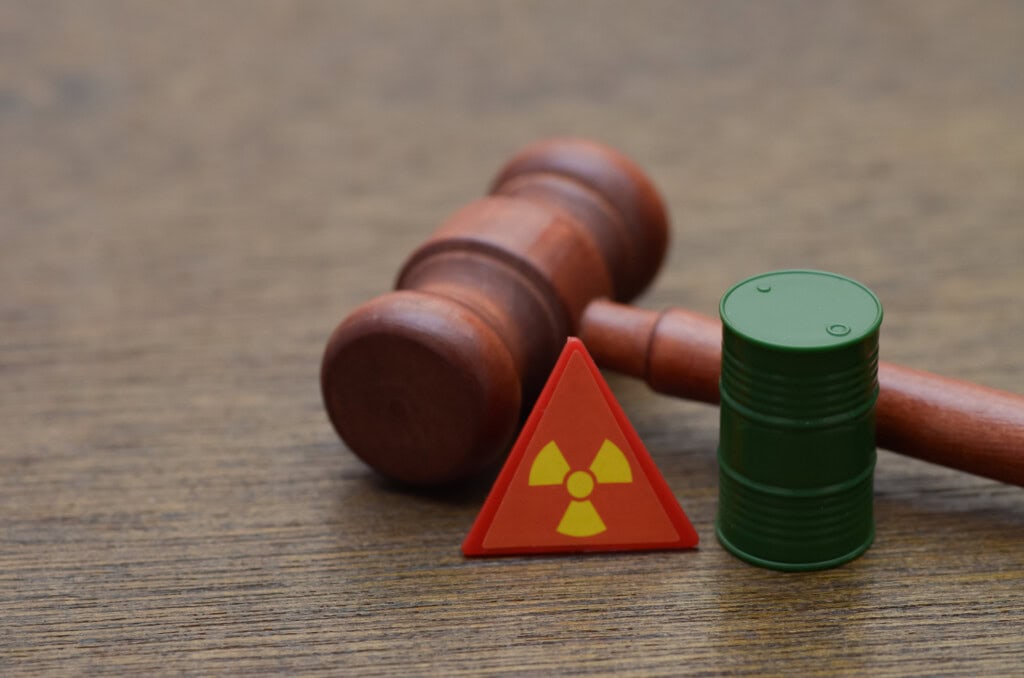
A nuclear verdict is generally considered a jury verdict of $10 million or more, including combined compensatory and punitive damages. Compensatory damages are awarded to plaintiffs for actual losses determined by a jury when a defendant, usually a business or corporation, is found liable. These damages include both economic and non-economic losses and are intended to make the plaintiff whole again. Punitive damages are intended to punish defendants for alleged wrongdoing and deter future wrongdoing. Depending on the case, punitive damages can drive up verdict amounts when the evidence convincingly shows that defendants acted with malice or reckless indifference to the law or to the plaintiff’s rights.
The Perception
Historically, nuclear verdicts have been associated with personal injury matters such as toxic torts, product liability, and medical malpractice cases. However, the trend is moving toward employment law nuclear verdicts. One reason is so-called “social inflation,” which involves sympathy for plaintiffs’ allegations and harm, distrust of large corporations, and the influence of social media or legal marketing on juror expectations. Constant media exposure can desensitize jurors to large numbers, especially when those figures are introduced early in a trial. As a result, verdicts may be skewed because jurors already have large numbers in mind. There is also a perception that corporations have the money to pay for alleged wrongdoing or have deep pockets because of insurance coverage. We often hear people say, “they don’t pay for it; their insurance does” or “they can afford it.” That may be true in some cases, but in reality, it is often a misguided perception. In fact, some insurance carriers do not cover alleged wrongful conduct in employment matters or charge substantial premiums for that coverage.
The Verdicts
Several cases support the trend of high verdicts based on substantial punitive damages awards by juries.
Giaquinta v. San Diego Health Alliance (2026). A jury awarded the plaintiff, a substance abuse counselor at a treatment center owned by the defendant, $105 million after determining that she was fired for reporting that she was sexually harassed by a co-worker, that there was a hidden camera in the employee bathroom, and that patient safety violations had occurred. Defendant failed to report the plaintiff’s claims to the state, as legally required, and terminated the plaintiff the day after a patient reported the same allegations against the same co-worker. The verdict included $70 million in punitive damages.
Williams v. Sysco Riverside, Inc. (2026). Five employees of the defendant, mostly drivers and yard workers, alleged whistleblower retaliation and wrongful termination after reporting unsafe work conditions and violations of food safety law. The jury verdict was $52 million, of which $21 million was for punitive damages.
Slagel v. Liberty Mutual Ins. Company (2025). A jury awarded the plaintiff, a 30-year employee, $103 million after finding that the defendant discriminated against her based on her age, harassed her, and retaliated against her for reporting the discrimination. The jury awarded $83 million in punitive damages, which was later struck down on appeal as excessive and because no malice was shown by defendants.
Litigation Strategy Considerations
Given the potential for large verdicts in employment cases, corporations should consider acting early when a case is headed for litigation. They should conduct a pain test, meaning they should evaluate an early settlement window and determine their economic pain threshold. Early assessment and resolution could be less painful than waiting for a plaintiff to file a lawsuit. Depending on the facts or the jurisdiction, waiting could be a harmful strategy.
Other considerations include early conflict resolution strategies, such as mediation. Early mediation can be helpful because it forces both parties to frame the issues without prolonged discovery, reveals strengths and weaknesses sooner rather than later, and allows a third-party neutral to give the parties a clearer perspective than either may have had before attempting this type of resolution. Lastly, defendants should consider mock jury trials and research regarding community attitudes to establish an early baseline for how the facts of the case are perceived. This provides perspective and helps counsel and clients understand trial risks early, which may help avoid a large and dangerous adverse verdict.
Considerations for Minimizing Risk
To try to avoid a nuclear verdict in an employment case, employers should:
- Conduct proactive internal compliance audits to ensure that managers are aligned on company policies and procedures and to identify and address potential issues before they escalate.
- Provide managers with training and maintain thorough documentation to help demonstrate good-faith decision-making and reduce exposure to claims of malice or reckless indifference.
- Engage in early, transparent, and effective internal complaint-handling processes, which can resolve concerns before they develop into larger disputes and weaken arguments for punitive damages.
- Coordinate with their insurance carriers well before any claim arises to assess coverage adequacy and ensure appropriate protections are in place.
- Encourage legal teams to consider implementing a nuclear-verdict-aware case assessment protocol to better evaluate risk and strengthen litigation preparedness.
How CMBG³ Can Help
Employers may want to take a closer look at their existing internal policies, training programs, or case assessment processes to determine the potential impact of punitive damages. Our team is here to help you address these and various other employment issues.
Critical Questions About Nuclear Verdicts in Employment Cases
What is a nuclear verdict, and why does it matter in employment cases?
A nuclear verdict is generally understood as a jury award of $10 million or more, often driven by significant punitive damages. It matters in employment cases because punitive damages can dramatically increase exposure beyond compensatory losses, especially where a jury believes an employer acted with malice, reckless indifference, or disregard for employee rights.
What lessons should employers take from the verdict examples discussed in the article?
The verdict examples show that juries may respond strongly to allegations involving retaliation, harassment, safety violations, discrimination, and failures to respond appropriately to internal complaints. Employers should recognize that poor documentation, delayed responses, inconsistent practices, and perceived indifference to complaints can create substantial trial risk.
What proactive steps can employers take before claims arise?
Employers can conduct internal compliance audits, train managers, maintain strong documentation, respond promptly and transparently to complaints, coordinate with insurance carriers, and adopt case assessment protocols that account for nuclear verdict risk. These steps can help reduce exposure and strengthen litigation preparedness.
Nathanael E. Wright is a partner at CMBG³
